
There’s a point in any home project where decisions start to blur together. Colours look similar, designs feel repetitive, and everything begins to feel… a bit generic. That’s usually when you realise—you don’t just want something that works. You want something that feels like you.
Doors are a surprisingly big part of that.
They’re not just functional. They sit right at the edge of your space, quietly shaping the first impression and the last one too. And when you get the details right, even subtle ones, the difference shows.
Where Personal Taste Actually Shows Up
It’s easy to assume that most doors come in a handful of standard styles and that’s it. But the moment you start exploring custom finish options, you realise there’s a lot more room to play than you expected.
Maybe it’s a matte black that feels modern but not too stark. Or a textured bronze that picks up light in a softer way. Sometimes it’s just a slightly warmer tone that ties everything together without screaming for attention.
What’s interesting is how these small choices end up defining the overall feel. You might not notice them every day, but they quietly shape how the space comes across—to you and to anyone walking in.
The Subtle Character of Iron
Iron doors, in particular, have a personality of their own. They’re strong, yes, but they’re not limited to that rugged, industrial look people often imagine.
The right iron finish can completely shift the vibe. A smooth, polished surface can feel sleek and contemporary, while a slightly distressed or hand-finished texture brings in a bit of character—something that feels lived-in, even when it’s new.
I once saw a door with a dark, almost charcoal finish that looked different depending on the time of day. In the morning light, it felt soft and understated. By evening, it had a deeper, richer tone. Same door, different moods. That’s the kind of detail you don’t expect, but once you notice it, you can’t unsee it.
Letting Light Do Its Thing
Then there’s the question of light. How much do you want to let in? How much do you want to keep out?
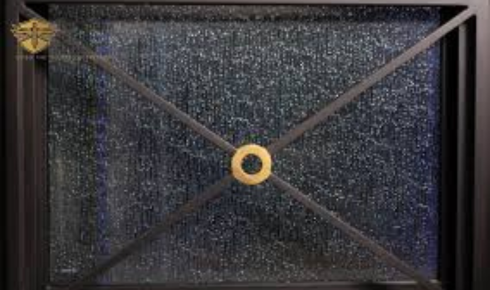
This is where glass options come into play. It’s not just about choosing between clear or frosted anymore. There are patterns, tints, even subtle textures that can filter light in interesting ways.
Some people prefer full privacy, with minimal or no glass. Others like a narrow panel that lets in just enough daylight to change the feel of the entryway. And then there are those who go for larger glass sections, turning the door into a kind of light source in itself.
There’s no right answer here—just what feels comfortable for your space.
It’s Not About Getting It Perfect
One thing that’s easy to forget is that you don’t need to get every detail exactly right. In fact, the slightly imperfect choices often feel more natural.
A finish that isn’t too polished. A glass panel that’s just a bit unconventional. These are the things that make a door feel less like a catalogue piece and more like something chosen with intention.
And honestly, that intention shows.
Living With Your Choice
At first, a new door stands out. You notice the finish, the way the light hits it, the texture under your hand. But over time, it becomes part of your routine.
You stop analysing it. You just use it.
But every now and then, something brings it back into focus. Maybe a guest compliments it, or you catch it in a certain light. And in that moment, you remember why you chose it.
That’s the kind of satisfaction that doesn’t fade quickly.
Balancing Style and Practicality
Of course, it’s not just about looks. A door still needs to hold up—to weather, to daily use, to time.
The good news is, modern materials and finishes tend to offer both. You don’t have to choose between something that looks good and something that lasts. You can have both, as long as you pay attention to the details that matter.
And often, those details are the ones you don’t see immediately.
A Quiet Ending Thought
In the end, choosing a door isn’t about following trends or picking the most popular design. It’s about finding something that fits—your space, your style, your everyday life.
And when you do, it doesn’t feel like a big decision anymore. It just feels right.
Maybe that’s the goal. Not perfection, not even uniqueness—but a sense that the choices you’ve made quietly belong where they are.