
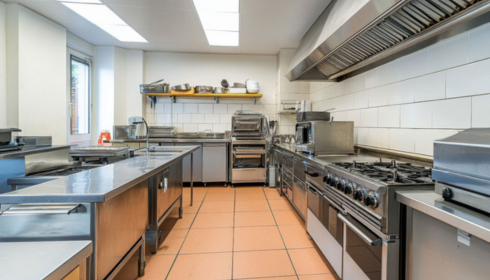
Most people walk into a restaurant, hotel, or factory and only notice what’s in front of them — the food, the comfort, the production line moving steadily. What they don’t see is everything working quietly behind the scenes to make that experience feel effortless.
And honestly, that’s how it should be. When systems are doing their job properly, you don’t think about them at all.
But once you start looking closer, you realize how much depends on things most people never notice.
Where Experience Really Begins (Before the First Plate or Greeting)
Think about your favorite dining spot. The lighting feels right, the kitchen runs like clockwork, and the food arrives without delay. It feels natural, almost easy.
But that “easy” experience is built on layers of planning and systems most guests never see.
In the world of restaurants, water quality, sanitation systems, supply flow, and operational timing all blend together in a way that has to feel invisible. If even one part slips, the entire experience feels different — even if customers can’t explain why.
A slightly slower service. A dish that tastes a bit “off.” A kitchen that feels strained during peak hours. None of these usually come from just one issue. They’re often the result of small operational gaps stacking up in the background.
And the interesting part? Most guests never connect the dots. They just feel it.
Comfort Isn’t Accidental — Especially in Hospitality
Now step into a hotel lobby. Everything feels calm. The air is controlled, the rooms are clean, the water runs perfectly, and even the smallest details feel intentional.
But that sense of comfort doesn’t happen on its own.
In hotels, behind every smooth check-in and clean room is a system constantly working — maintenance schedules, water management, climate control, laundry cycles, and more. It’s all happening quietly, often simultaneously, so guests don’t experience interruptions.
And when it works well, it becomes invisible. Nobody praises a perfectly functioning HVAC system or flawless plumbing — they just enjoy a good night’s sleep without thinking about why it feels good.
That’s the strange thing about hospitality. Success is measured by how little guests notice the effort behind it.
The Industrial Backbone Most People Never Think About
Now shift the perspective completely. Out of the public eye, inside large facilities and production units, things operate on a very different scale.
In manufacturing, precision isn’t optional — it’s everything. A small inconsistency can affect entire production batches. Downtime can mean lost revenue. Even minor inefficiencies can ripple through the system in ways that aren’t immediately visible but become costly over time.
Here, systems are designed not just for performance, but for stability. Flow, temperature, pressure, timing — everything has to stay within tight limits.
What’s interesting is how much of this depends on coordination rather than complexity. It’s not about one big machine doing everything. It’s about dozens of smaller systems working in sync without friction.
And when that synchronization works, production feels almost effortless from the outside. But inside, it’s a carefully balanced ecosystem.
Why We Only Notice Systems When They Fail
There’s a pattern across all three spaces — restaurants, hotels, and manufacturing units.
When everything works, nobody talks about it. But when something breaks, everyone notices.
A delayed service in a restaurant becomes a complaint. A maintenance issue in a hotel becomes a review. A production delay in manufacturing becomes a financial problem.
It’s a bit unfair, but that’s how perception works. The smoother something runs, the less visible the effort behind it becomes.
And maybe that’s why these systems are often underestimated. Their success is measured in silence.
The Pressure of Staying Invisible
There’s a strange pressure that comes with running systems like these — the expectation that everything should just work all the time.
No delays. No interruptions. No visible strain.
But behind that expectation is constant monitoring, adjustments, maintenance cycles, and contingency planning. It’s a continuous effort to prevent small issues from becoming noticeable problems.
And the better the system, the more invisible that effort becomes.
It’s a strange kind of success — being essential but unnoticed.
The Human Side of Operational Efficiency
It’s easy to talk about systems like they’re purely mechanical, but there’s always a human layer involved.
A chef adjusting timing during peak hours. A hotel staff member catching a small issue before guests notice. A technician preventing a machine breakdown before it affects production.
These small decisions, made in real time, are what keep everything smooth.
And often, they’re not celebrated. They’re just expected.
When Everything Comes Together Without Noise
The best-run environments don’t feel impressive in the traditional sense. They feel calm. Predictable. Almost effortless.
You don’t think about water systems in a hotel. You don’t question the timing of your meal in a restaurant. You don’t wonder about the efficiency of a production line when products arrive on time.
And that’s the point.
Because when systems across restaurants, hotels, and manufacturing all do their job properly, the result isn’t attention — it’s experience.
A seamless one.
And maybe that’s the real definition of good infrastructure: not what people notice, but what they never have to think about at all.